1. Complex Pricing Models and Hidden Fees
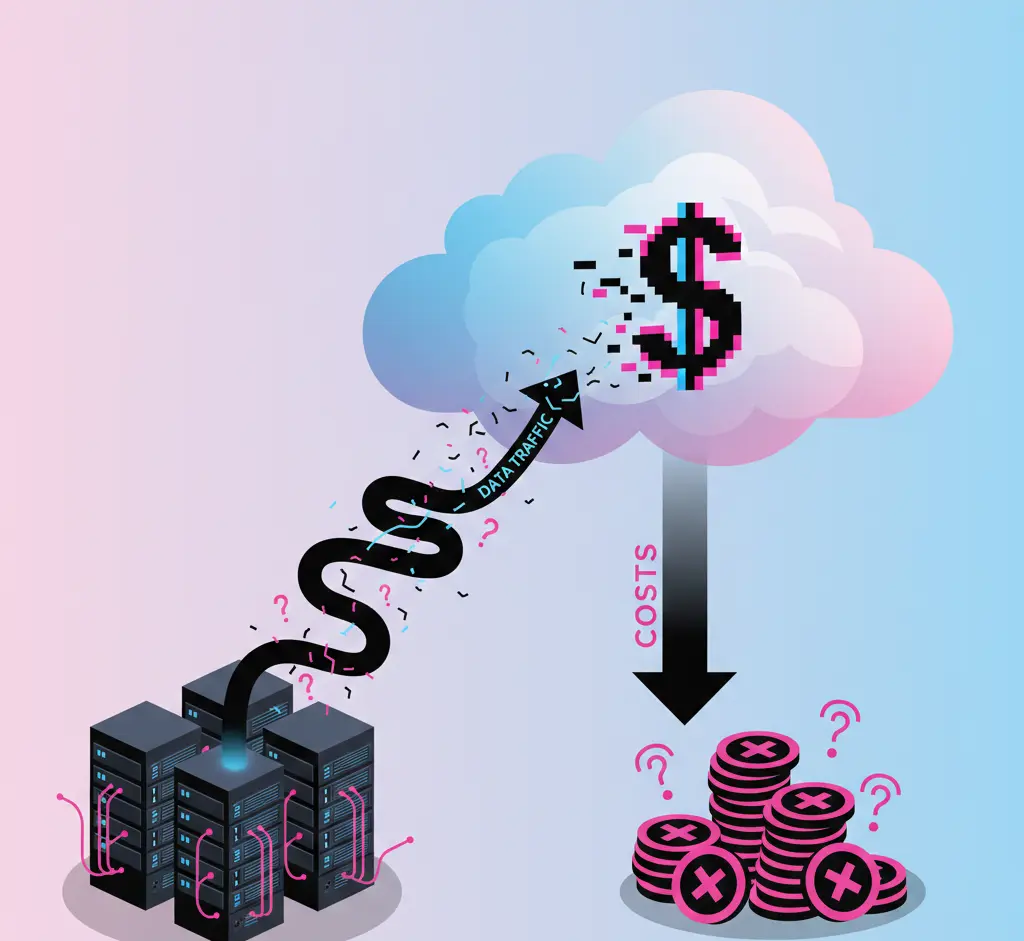
Cloud providers offer a vast array of services, each with its own intricate pricing structure. What seems straightforward at first glance quickly becomes a labyrinth of charges. Beyond the obvious compute and storage costs, businesses encounter fees for data transfer (egress, especially), API calls, network operations, managed services, IP addresses, and even monitoring logs. These "micro-charges" can accumulate rapidly, especially for applications with high interaction patterns or significant data movement. Understanding and optimizing these numerous line items requires dedicated expertise, which many organizations lack, leading to unchecked expenses.
2. Underutilization and Oversized Resources
One of the primary drivers of cloud inflation is the prevalent issue of underutilization and over-provisioning. While elasticity is a cloud benefit, many applications are provisioned with more compute power or storage than they actually need, often as a precaution or due to a lack of precise demand forecasting. Virtual machines might run 24/7 even when idle, or databases might be scaled to handle peak loads that only occur rarely. This "always-on" mentality, carried over from traditional on-premise infrastructure, defeats the pay-per-use advantage of the cloud. Consequently, businesses pay for resources that sit idle, significantly increasing their monthly spend without a corresponding increase in active usage or traffic.
3. Data Transfer Costs (Egress)
A particularly painful and often underestimated cost in cloud computing is data transfer, specifically "egress" – moving data out of the cloud provider's network. While data ingress (moving data into the cloud) is typically free or very cheap, egress charges can be substantial. This impacts scenarios like users downloading files, data replication between regions, transferring data to third-party services, or even sending logs to external monitoring tools. As applications become more distributed and interactive, and as data volumes grow, egress fees can become a dominant component of the cloud bill, sometimes surpassing compute costs, even if actual user traffic growth is modest.
4. Vendor Lock-in and Switching Costs
While cloud providers offer an open market for services, the reality is that deep integration with a specific vendor's ecosystem can lead to a form of "vendor lock-in." Leveraging proprietary services, APIs, and management tools makes it increasingly difficult and costly to migrate workloads to a different cloud provider or back on-premise. The time, effort, and technical challenges involved in re-architecting applications, refactoring code, and migrating data act as a significant deterrent to switching. This reduced competition for existing workloads can subtly influence pricing over time, as the "cost of leaving" outweighs the immediate benefit of finding a cheaper alternative, contributing to an inflationary effect.
5. The "Ops" Burden and Skills Gap
Effectively managing cloud costs and operations is not a set-it-and-forget-it task. It requires continuous monitoring, optimization, and specialized expertise in cloud financial management (FinOps). Organizations need skilled engineers who understand resource utilization, cloud architecture best practices, and cost optimization strategies. The demand for such talent is high, leading to increased personnel costs. Without dedicated FinOps practices, businesses often lack visibility into their spending patterns, fail to identify inefficiencies, and miss opportunities for savings (e.g., reserved instances, spot instances). This operational burden and skills gap contribute to cloud inflation by preventing proactive cost management.
6. Increasing Complexity of Cloud Services
Cloud providers are constantly innovating, releasing new services and features at a rapid pace. While this offers immense capabilities, it also adds layers of complexity to cloud management and potentially to the bill. Each new service introduced might come with its own set of charges, and integrating them into an existing architecture requires careful planning and skilled implementation. The sheer volume of options can be overwhelming, leading to suboptimal choices or increased reliance on managed services that, while convenient, can be more expensive than self-managed alternatives if not precisely configured and monitored. The continuous evolution means organizations must constantly adapt their cost management strategies to keep pace.
Conclusion: Taming Cloud Inflation
Cloud computing remains a powerful enabler for digital transformation, but its financial benefits are not automatic. To combat cloud inflation, organizations must adopt a proactive and disciplined approach to cloud cost management. This involves:
-
Continuous Monitoring and Optimization: Implementing robust tools and practices to track spending, identify underutilized resources, and right-size services.
-
FinOps Culture: Fostering a culture where financial accountability is integrated into every stage of cloud adoption and development.
-
Architectural Efficiency: Designing applications to be cloud-native and cost-efficient from the outset, focusing on serverless, auto-scaling, and efficient data handling.
-
Strategic Planning: Regularly reviewing cloud contracts, leveraging discounts (reserved instances, savings plans), and understanding the long-term implications of architectural choices.
By moving beyond the initial illusion of infinite elasticity and embracing rigorous cost management, businesses can truly unlock the economic advantages of the cloud, ensuring their server bills align with their business growth, not outpace it.